
 (941) 539-2423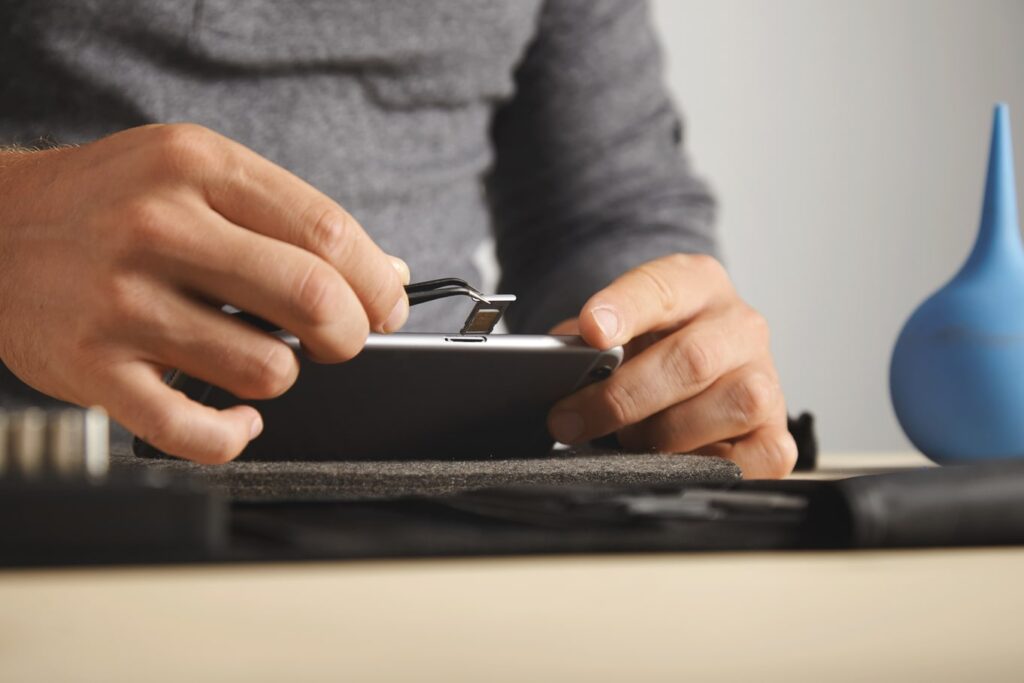
What to do when your device has been damaged by water
Turn it off immediately
If your device has been damaged by water, the most important thing you can do is turn it off immediately. This will help prevent further damage and give you the best chance of recovering your device.
Once your device is turned off, remove any SIM cards or memory cards (if possible) and dry them off. If you can’t remove the SIM card, leave it in place.
If your device has a removable battery, take it out and dry it off. Again, if you can’t remove the battery, leave it in place.
Next, take a look at the ports and jacks on your device and make sure they’re clear of water. Use a can of compressed air (available at most electronics stores) to blow out any water that’s inside the ports or jacks.
Once you’ve done all of this, place your device in a bag of rice and seal it up. The rice will help absorb any moisture that’s still inside your device. Let it sit for 24-48 hours before trying to turn it on again.
Take out the SIM card and memory card
If your phone or tablet has been damaged by water, the first thing you should do is remove the SIM card and memory card (if applicable). These can short circuit if left in a wet device, and you don’t want to risk further damage.
Remove the battery (if possible)
If your device has been damaged by water, the first thing you should do is remove the battery (if possible). This will help to prevent further damage to your device and will also help to prevent any short circuits that could occur.
Once you have removed the battery, you should then try to dry off your device as much as possible. You can do this by using a clean cloth or a hairdryer on a low setting.
Once you have dried off your device, you should then try to power it on. If it powers on, you should then backup all of your data as soon as possible. If it does not power on, you should take it to a qualified repair person or store as soon as possible.
Dry it off with a towel or a blow dryer
If your phone or another device falls into water, the first thing you should do is to dry it off as much as possible. If you can, remove the battery and SIM card (if applicable) and shake or blow dry the device. Then, use a towel to dry it off as much as possible. If you have a blow dryer, you can use that on a cool setting to help draw out any remaining water.
How to fix a water-damaged device
If your phone or another device has come into contact with water, you may be wondering how to fix it. The first thing you should do is turn off the device and remove the SIM card and any other removable parts. Then, you should dry the device off as much as possible. If you can, try using a vacuum cleaner with the nozzle attachment to remove any remaining water. You should also remove the battery if possible.
Use rice to absorb the moisture
If you’ve accidentally dropped your phone in water, the first thing you should do is turn it off. Then, remove the SIM card and any external memory devices. Once you’ve done that, you’ll want to dry it off as much as possible—but don’t use a blow dryer, as that could push the water further into thephone. Instead, leave your phone in a bowl of rice overnight. The rice will help absorb any moisture that’s still hiding inside your phone.
Use a vacuum cleaner to suck out the moisture
Use a vacuum cleaner to suck out the moisture. If you have a wet/dry vac, this will work even better. Make sure to use the brush attachment, not the hose attachment. Put the vacuum cleaner on “blow” mode and hold it up to the phone. The goal is to get as much of the moisture out as possible.
Use a hair dryer to blow out the moisture
Using a hair dryer to blow out the moisture from your device is one of the quickest and most effective ways to fix a water-damaged device. First, make sure that your device is turned off and remove any external batteries or SIM cards. If possible, remove the back cover of your device to allow the heat to circulate more evenly.
Place your hair dryer on the lowest setting and hold it about six inches away from your device. Slowly move the hair dryer back and forth across the surface of your device, taking care not to focus on any one area for too long. After a few minutes, check to see if your device is starting to dry out.
If you don’t have a hair dryer, you can also try using a can of compressed air. Simply point the can at your device and spray in short bursts. Again, make sure that you don’t focus on any one area for too long and keep the can about six inches away from your device.
Use a can of compressed air to blow out the moisture
If you’re confident that the ports and jacks are dry, grab a can of compressed air, point it towards the inside of the device, and give it a good blast. You might want to do this over a bowl or sink just in case you blow some water out while you’re blow-drying. If you have an iDevice with a dock connector or other sensitive port, you can use a soft-bristled toothbrush to gently brush away any debris.
How to prevent your device from being damaged by water
Water damage is one of the most common problems that people have with their devices. If you’re not careful, it can easily happen to you. The good news is that there are some things you can do to prevent it.
Use a waterproof case
If you’re using an iPhone, put it in a waterproof case. You can find these cases online or at most phone stores. If you have an Android phone, there are several waterproof cases available, but not all cases will fit all phones. Make sure to check the size and model of your phone before buying a case.
If you don’t have a case, or if your phone doesn’t fit in a case, put it in a sealable plastic bag. This will help protect it from any water that might get inside the bag.
If you’re going to be near water, avoid using your phone altogether. If you must use it, keep it in your pocket or bag until you’re ready to use it.
Use a waterproof bag
If you’re headed to the beach or swimming pool, or even planning on taking a dip in your hotel sink, a waterproof bag is an essential piece of gear to keep your phone dry. Waterproof cases like the Lifeproof Fre can protect your phone from submersion in up to 6.6 feet of water for up to an hour, and they’ll also guard against dirt, dust and snow. You can also find waterproof pouches that are big enough to hold your phone and some cash or credit cards; these typically don’t offer as much protection as a full-fledged case, but they’re much cheaper and can still help you avoid costly repairs if you accidentally drop your phone in the pool.
Use a water-resistant coating
If you don’t have a water-resistant device, you can use a water-resistant coating to protect it from water damage. There are many different types of water-resistant coatings available, and they all have their own advantages and disadvantages. Some of the most popular types of water-resistant coatings include:
-Nano-coating: This is a very thin coating that is applied to the outside of a device. It is designed to repel water, and it can also provide some protection against scratches and other damage.
-Hydrophobic coating: This type of coating is applied to the inside of a device. It creates a barrier between the electronics and the water, and it can also help to prevent corrosion.
-Silicone sealant: This is a thick, rubbery substance that is applied to the outside of a device. It forms a waterproof barrier that can protect your device from both water and dust.